
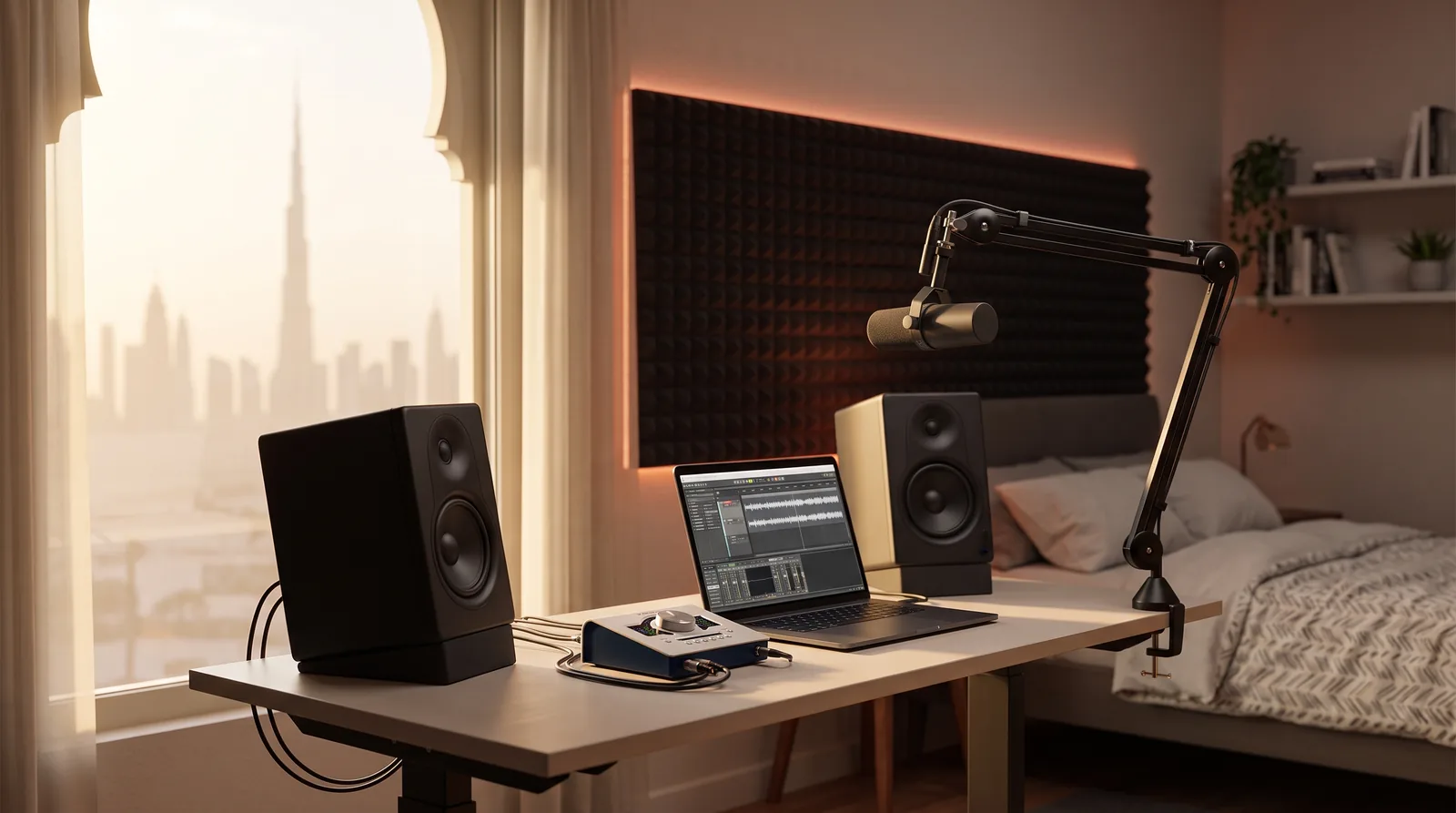
Setting up a home recording studio in the UAE presents specific architectural and acoustic conditions: hard ceramic tiled floors, concrete block walls, double-glazed balcony windows, and air conditioning systems that run throughout the summer. This step-by-step guide walks through building a functional home production studio in the correct order.
Step 1: Room Selection & Layout
Your room geometry shapes your low-frequency response long before you purchase your first monitor speaker:
- Avoid Perfect Cubes: Rooms where length, width, and height are identical generate severe overlapping standing waves (room modes) that destroy bass accuracy.
- Orientation: Place your studio desk facing the shorter wall so that sound waves travel down the longest dimension of the room before reflecting.
- Floor Reflections: Tiled floors are standard across UAE residences. Laying down a dense rug between your desk and chair is the single most cost-effective first acoustic upgrade.
Step 2: The Core Four Signal Chain
Every recording studio workstation relies on four essential components:
- Microphone: Matched to your room acoustic treatment level.
- Audio Interface: Providing clean preamplification and low-jitter digital conversion (e.g. RME Babyface Pro FS).
- Studio Monitoring: A dual approach: closed-back headphones for tracking isolation (Beyerdynamic DT 770 PRO) and open-back reference cans for mastering (DT 990 / DT 1990 PRO MKII).
- DAW Software: Digital Audio Workstation for multitrack recording and mixing.
Step 3: Acoustic Treatment for UAE Apartments
Do not confuse soundproofing (stopping sound from entering or leaving a room) with acoustic treatment (controlling sound wave reflections inside the room):
- First Reflection Points: Place 50mm high-density acoustic absorber panels at ear height on the side walls to eliminate comb-filtering echoes.
- Curtain Dampening: Hang thick blackout velvet curtains over sliding glass balcony doors to absorb harsh high-frequency flutter.
Step 4: UAE Climate & Gear Longevity
- Humidity Maintenance: Maintain steady indoor air conditioning (22-24°C) to prevent moisture buildup inside microphone capsules and ribbon transducers.
- Dust Protection: Keep studio monitors and interfaces covered with dust jackets when not in use to preserve potentiometer and fader contacts.
Frequently Asked Questions
Can I record professional vocals in a Dubai apartment?
Yes: by pairing a high-output dynamic microphone with reflection dampening (a heavy duvet or acoustic absorption screen placed behind the vocalist), you can achieve radio-ready vocal clarity in any residential bedroom.
What should I upgrade first as my studio expands?
Always upgrade your monitoring chain (open-back reference headphones and acoustic room calibration) first. If you cannot accurately hear your audio frequencies, superior microphones and preamps cannot compensate.